How to Clean a Steering Wheel (Leather, Alcantara, Plastic)
How to clean a steering wheel safely: the right cleaner for leather, Alcantara and plastic, what not to use, and how to tell grime from wear.
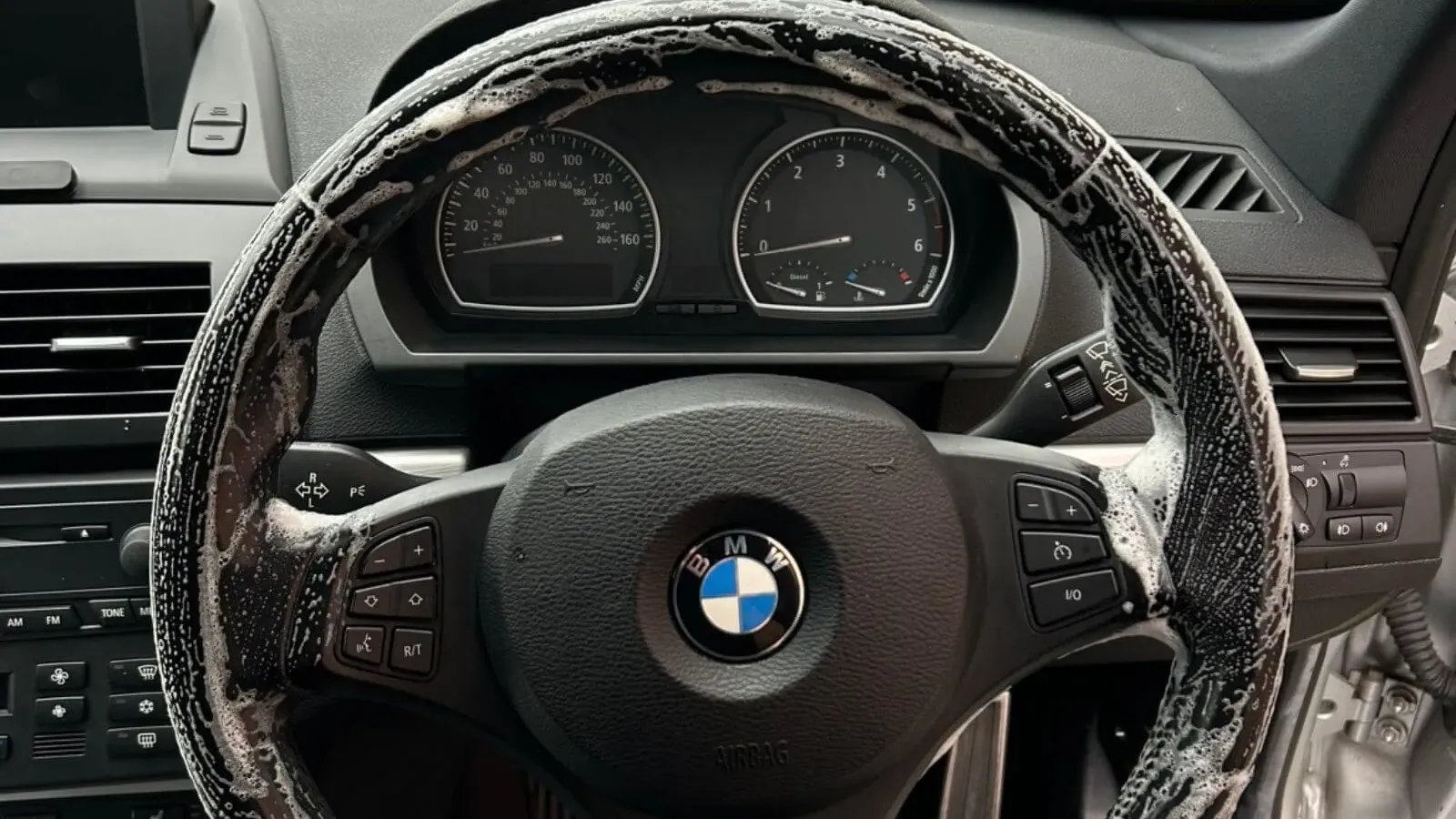
To clean a steering wheel properly, spray a gentle, pH-neutral interior or leather cleaner onto a soft brush or microfibre cloth, work it into the rim a section at a time, then wipe the grime away with a clean, slightly damp microfibre and dry it. Never spray straight onto the wheel, and keep moisture away from the airbag cover and switches.
What you use depends on what the wheel is made of. Leather, Alcantara and plastic each need a slightly different approach, and the most common mistakes, like household wipes, magic sponges and shiny dressings, do more harm than the dirt.
Below is why steering wheels get so grimy, how to clean each type at home, and what we do on our jobs.
Why steering wheels get so dirty
Your hands are on the wheel every time you drive. They leave behind skin oils, sweat, hand cream, sanitiser residue and whatever was on them before you got in: food, fuel from the pump, dirt from the garden. Over months, that builds up into a film that sits in the grain of the leather and the stitching.
You can usually tell by the shine. A leather wheel that looks glossy, especially at ten-to-two where your hands sit, isn't polished. It's coated in grime. Clean leather on most modern cars has a soft, satin look. On Alcantara and suede-style wheels, the same oils flatten the fibres, so the rim goes dark, matted and slightly slippery.
It matters for more than looks. A greasy rim is less grippy, and grime left on leather for a long time speeds up wear on its protective top layer.
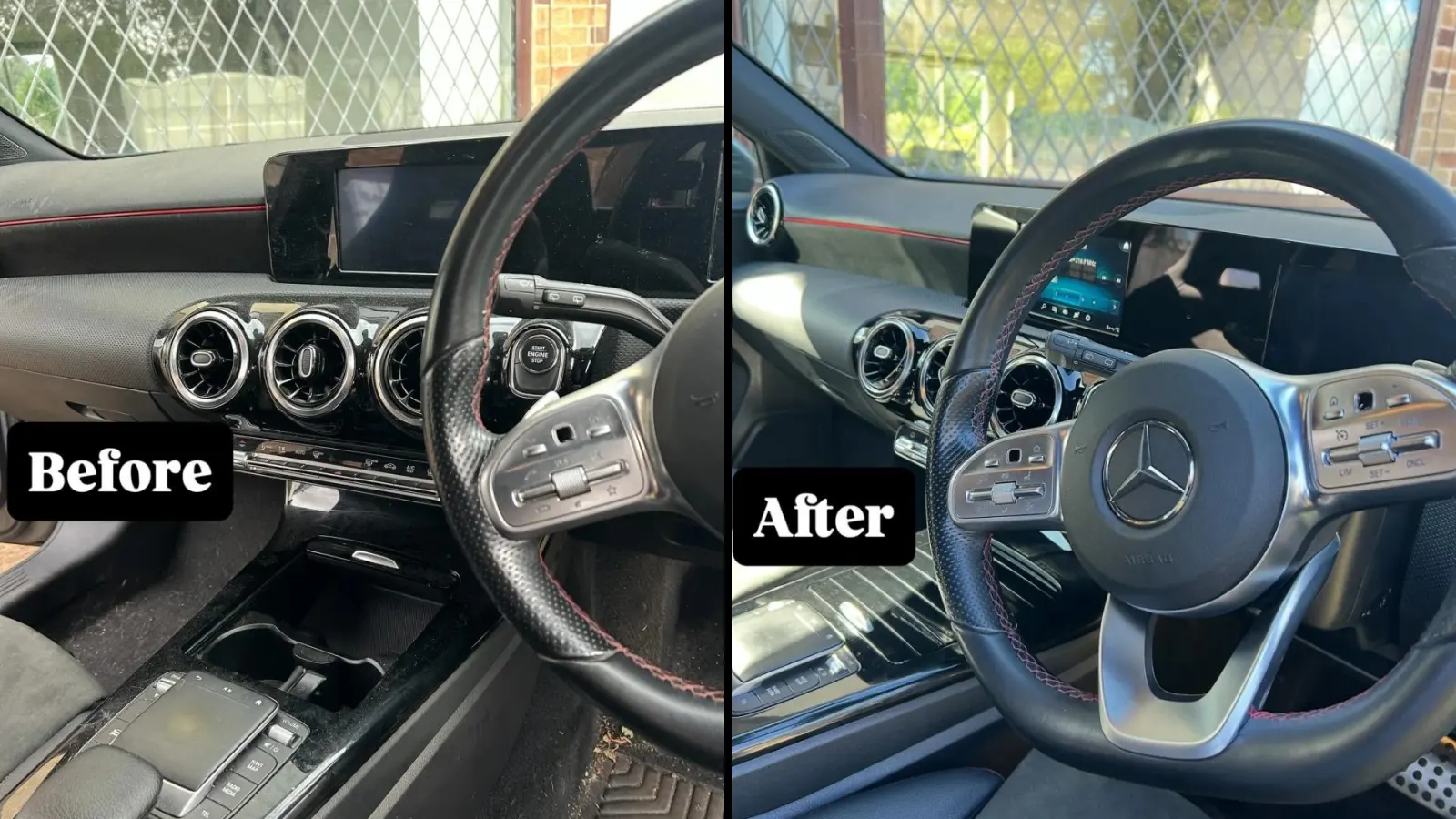
How to clean a steering wheel at home
This is the safe routine for most wheels. Always read the label of whichever product you use, and try it on a small, hidden area first.
- Park with the engine off and the wheel cool. Out of direct sun, so the cleaner doesn't dry before you wipe it off.
- Spray onto the brush or cloth, not the wheel. Liquid sprayed onto the rim runs into switches, seams and around the airbag cover, where it shouldn't be.
- Work in sections. Use a soft brush (a soft leather brush or a soft-bristled detailing brush) to work the cleaner into the grain and along the stitching. Light pressure is enough; let the cleaner do the work.
- Wipe it away straight after. Use a clean microfibre to lift the loosened grime off before it dries back on. You'll often see the dirt come off on the towel.
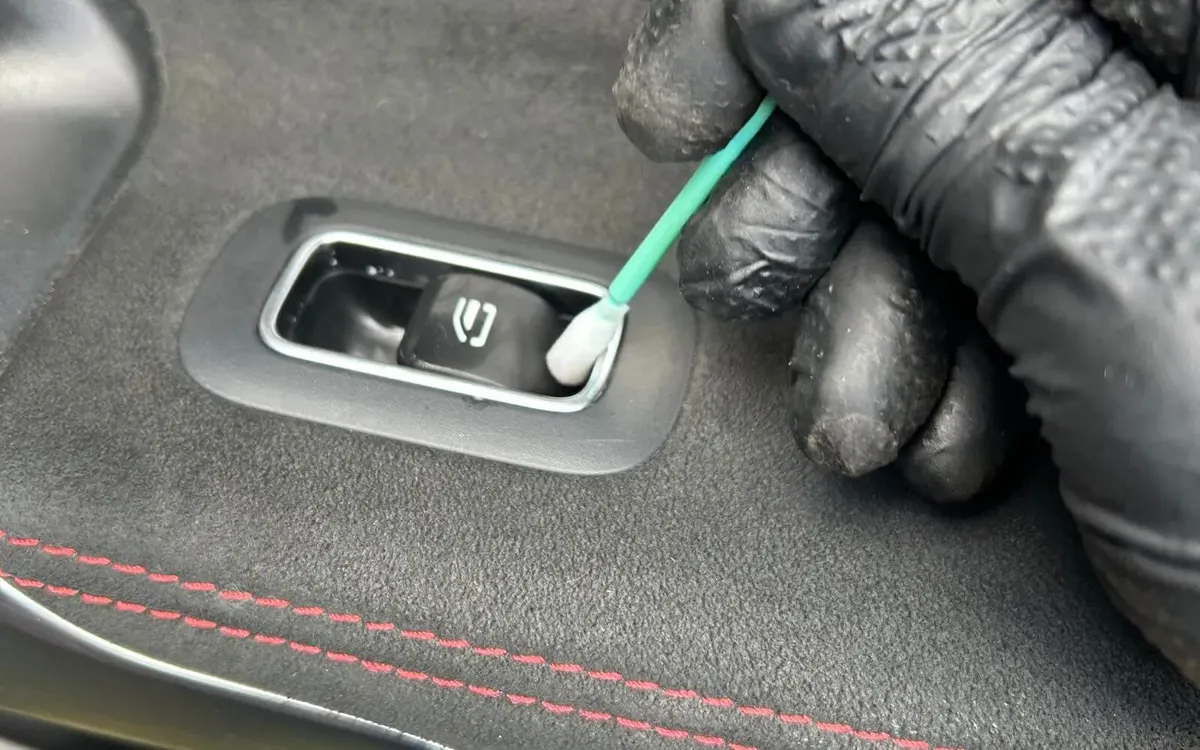
- Do the spokes, back of the rim and switches. The back of the rim, where your fingers wrap round, is often the dirtiest part. Use a barely damp cloth or a cotton bud on buttons and paddles.
- Dry it. Finish with a dry microfibre so no damp is left in the stitching.
If the cloth is still coming away dirty, repeat on that section rather than scrubbing harder.
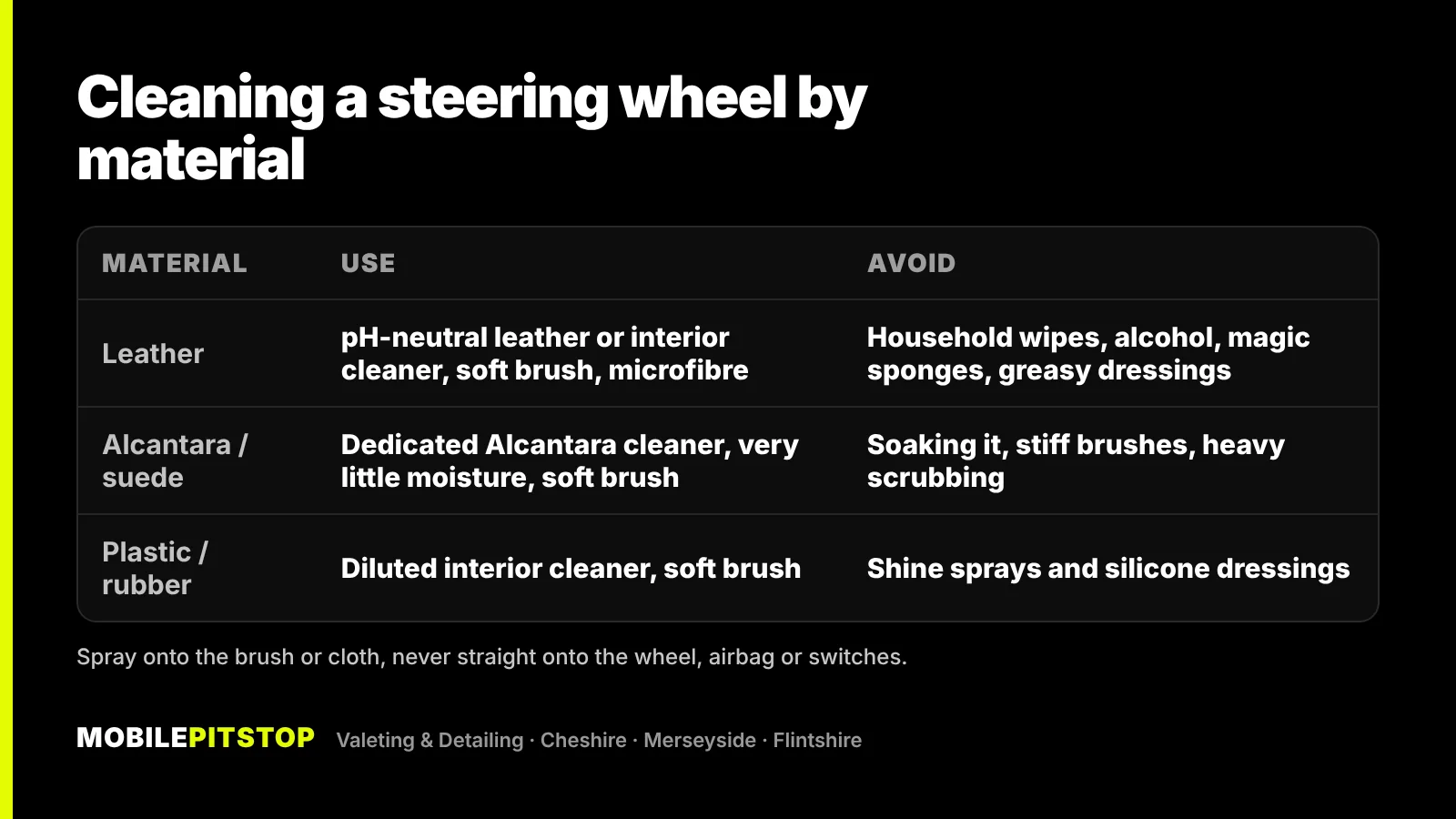
Leather, Alcantara or plastic: what's different
Leather
Most leather steering wheels on modern cars have a protective coloured coating on top. That's the layer you're cleaning, and the one you want to avoid wearing through. A pH-neutral leather or interior cleaner and a soft brush are all it needs.
Leather conditioner is less useful on a wheel than people think. Coated leather doesn't soak much up, and anything greasy left on the rim makes it slippery in your hands. If you want to make future cleans easier, a dedicated leather protection product is a better choice than a heavy conditioner.
Alcantara and suede-style wheels
These are the most delicate. Use a cleaner made for Alcantara, very little moisture, and a soft brush. Lightly dampen the cloth or brush, clean a small area, blot it, and let it dry fully. Once dry, brush the fibres gently in one direction to lift them. Soaking it or scrubbing hard can leave the surface patchy or bobbled.
Plastic and rubber wheels
The easiest to clean. A diluted interior cleaner on a soft brush, then a wipe and dry, is enough. Skip the shiny dashboard sprays: a glossy wheel is a slippery wheel, and silicone dressings can leave your hands greasy too.
What not to use on a steering wheel
- Household wipes and kitchen sprays. Many contain alcohol or strong degreasers that dry out and dull the leather's coating over time.
- Magic (melamine) sponges. They work by gently abrading the surface, so on a leather wheel they can rub through the colour coating.
- Bleach or strong solvents. They can discolour leather and stitching.
- Too much water. Soaking the rim drives moisture into the stitching and padding, and towards the airbag and switches.
- Shine sprays and silicone dressings. They make the rim slippery, which is the last thing you want on a steering wheel.
- Stiff brushes. Fine for tyres, too harsh for leather or Alcantara.
How we clean steering wheels on our jobs
The steering wheel is part of every Interior Deep Clean, not an afterthought. On a typical job:
- Compressed air goes through the joins and vents around the dash and column first, so loose dust comes out before anything gets wiped.
- The wheel, gear selector and other contact areas are cleaned and steam cleaned. The steering wheel is sanitised as standard, because it's one of the most-touched surfaces in the car.
- Crevices, seams, switches and vents are agitated by hand with detailing brushes and swabs.
- Plastics around the wheel are scrubbed to a natural satin finish, not greased.
If the leather is in good condition and you'd like it to stay that way, a leather coating can be added to an Interior Deep Clean, and a leather ceramic coating is available as an add-on to a Protection Detail. Both make the next clean easier.
If the whole car needs a reset, inside and out, the In & Out Deep Clean includes everything in the Interior Deep Clean as well as the exterior. It's also worth knowing that in a smoker's car, a yellow film on the wheel is part of the smell problem, which our guide to getting rid of cigarette smell in a car covers.
When cleaning won't fix it
Cleaning removes grime. It can't put back leather that's already worn. Look closely at the rim in daylight:
- Dirt comes off on a white cloth, and the shine fades as you clean.
- Wear stays: patches where the colour has rubbed off, a lighter or smooth bald area where your hands rest, cracks, or loose and broken stitching.
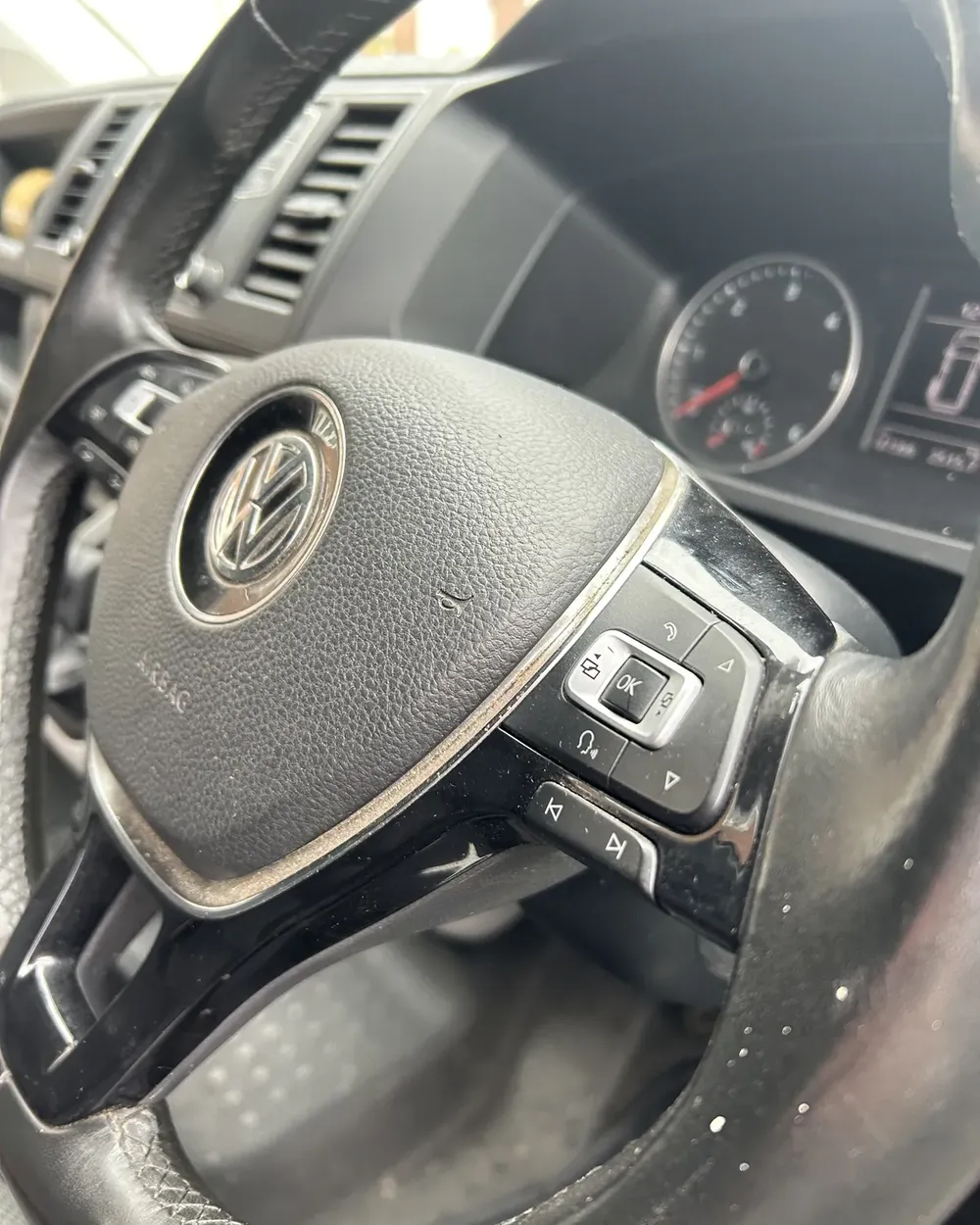
A clean will still make a worn wheel feel and look better, but if the coating has gone through, the fix is a re-colour or re-trim from a specialist. If you're not sure which you've got, send us a few photos in daylight and we'll tell you straight which service the car needs, including when a cheaper one will do.
Common questions
What is the best way to clean a leather steering wheel?
Spray a pH-neutral leather or interior cleaner onto a soft brush, work it into the rim a section at a time, then wipe it off with a clean microfibre and dry it.
Why is my steering wheel shiny?
On most modern leather wheels, shine is a build-up of skin oils and grime rather than polish. Clean leather usually has a soft, satin look.
Can I use baby wipes or household wipes on my steering wheel?
It's best not to. Many contain alcohol or degreasers that dry out and dull the leather's coating over time, and they leave a residue.
How do you clean an Alcantara steering wheel?
Use a cleaner made for Alcantara with very little moisture and a soft brush, blot it and let it dry. Then brush the fibres gently in one direction to lift them.