How to Get Rid of Cigarette Smell in a Car
Cigarette smell lives in the roof lining, seats and vents, which is why air fresheners fail. What works at home, and how we remove it at the source.
Cigarette smell in a car isn't floating in the air. It's stuck to the surfaces: a sticky film of tar and nicotine on the roof lining, the seat fabric, the carpets, the seatbelts, the glass and inside the vents. That's why an air freshener only covers it for a few days before it creeps back.
Getting rid of it means taking that residue out of the car, then treating whatever smell is left in the parts you can't scrub. You can make a real dent at home. A car that's been smoked in for years usually needs deep fabric cleaning and an ozone or chlorine dioxide treatment as well.
Below is why the smell sticks, what you can do yourself, where DIY runs out and how we deal with it on our jobs.
Why cigarette smell sticks to a car
Smoke carries tiny particles of tar and other residue. In a small, closed cabin they settle on everything and soak into anything soft. Every cigarette adds another layer, and the smell comes off those layers whenever the car warms up or gets damp. That's why a smoker's car often smells worst on a warm day or after rain.
The places that hold the most:
- The roof lining (headlining). Smoke rises, and the soft fabric above your head soaks it up. On a heavy smoker's car it's often stained yellow or brown.
- Seat fabric and the foam under it. Fabric seats absorb residue like a sponge. Leather holds less, but the stitching and perforations still trap it.
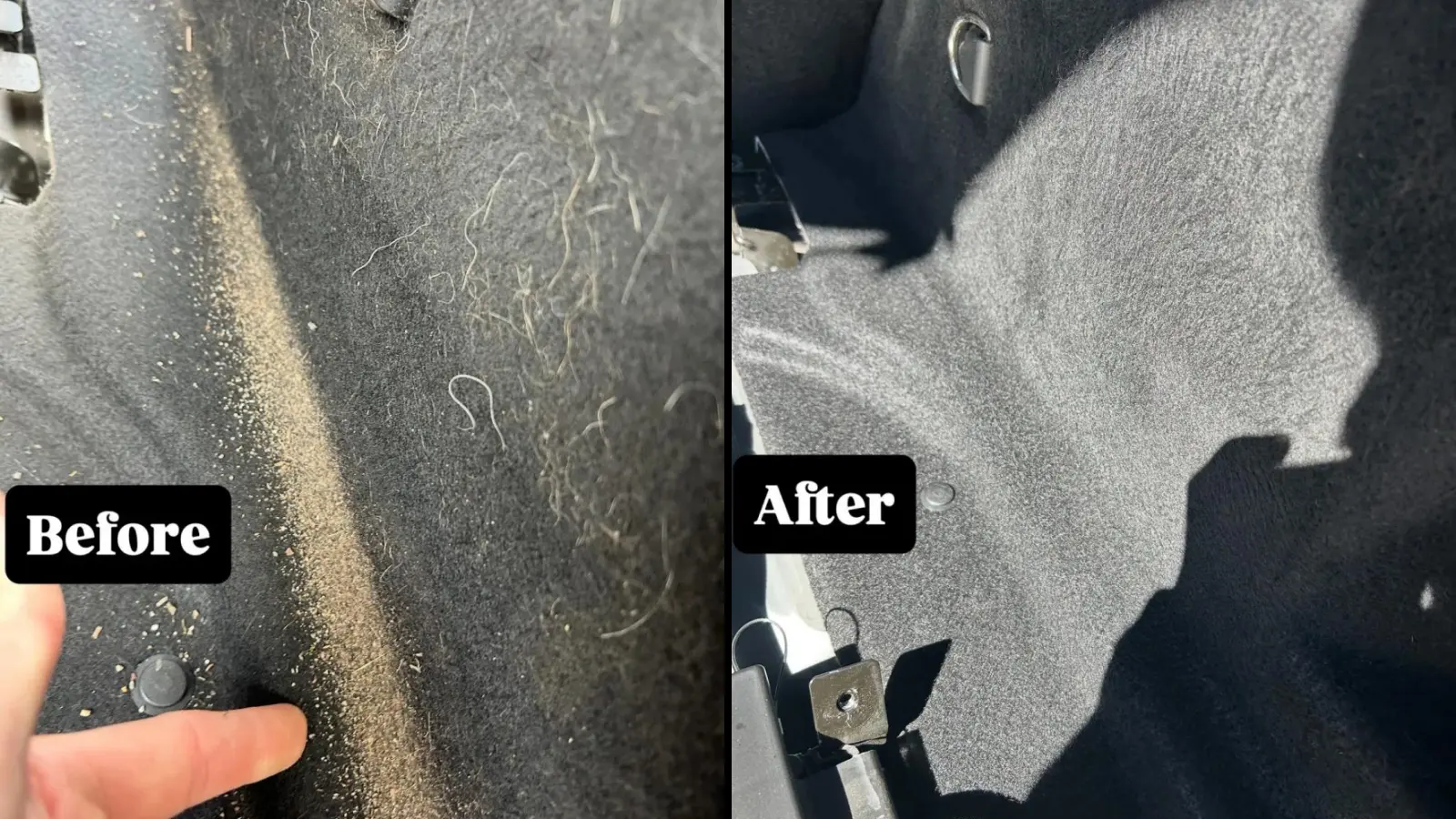
- Carpets and mats, along with ash and the odd dropped butt down the seat rails.
- The ventilation system and cabin air filter. Every time the fan runs, smoky air is pulled through it, and the smell blows back out later.
- Seatbelts, door pockets and the ashtray, plus a greasy film on the inside of the glass.
Why air fresheners don't fix it
An air freshener adds a stronger smell on top of the one you've got. It masks the odour, and does nothing about the residue causing it. Once the scent fades, the smoke smell is still there, sometimes mixed with the freshener into something worse.
The same goes for sprays that "neutralise" odours on contact. They can help in the air for a while, but they can't reach residue soaked into the roof lining or deep in the seat foam. To get rid of the smell you have to get rid of what's making it.
How to reduce cigarette smell yourself
On a car that's only been smoked in now and then, this can be enough. On a heavy smoker's car it's a good start. Work through it in order, and pick a dry day so you can leave the doors open.
- Remove the source. Empty and wash the ashtray, or take it out if it lifts out. Pull out the mats and look under and between the seats for butts and ash.
- Vacuum everything thoroughly, including the seat rails, door pockets and the gaps around the centre console. Ash is fine and gets everywhere.
- Wipe down the hard surfaces with a suitable interior cleaner and a microfibre cloth: dashboard, door cards, console, steering wheel, seatbelt buckles. You'll often see a yellow tinge come off on the cloth.
- Clean the inside of the glass, more than once if needed. Smoke film makes glass smeary and adds to the smell.
- Replace the cabin air filter. On many cars it's behind the glovebox and is a simple swap. Check your handbook.
- Air the car out. Leave the windows down somewhere safe for as long as you can. Bicarbonate of soda sprinkled on dry carpets, left overnight and then vacuumed up, can take the edge off carpet odour.
Be careful with the roof lining. It's glued to the roof panel, and soaking it can loosen the glue and make it sag. If it needs cleaning, use a lightly dampened cloth and a gentle cleaner, and don't scrub hard.
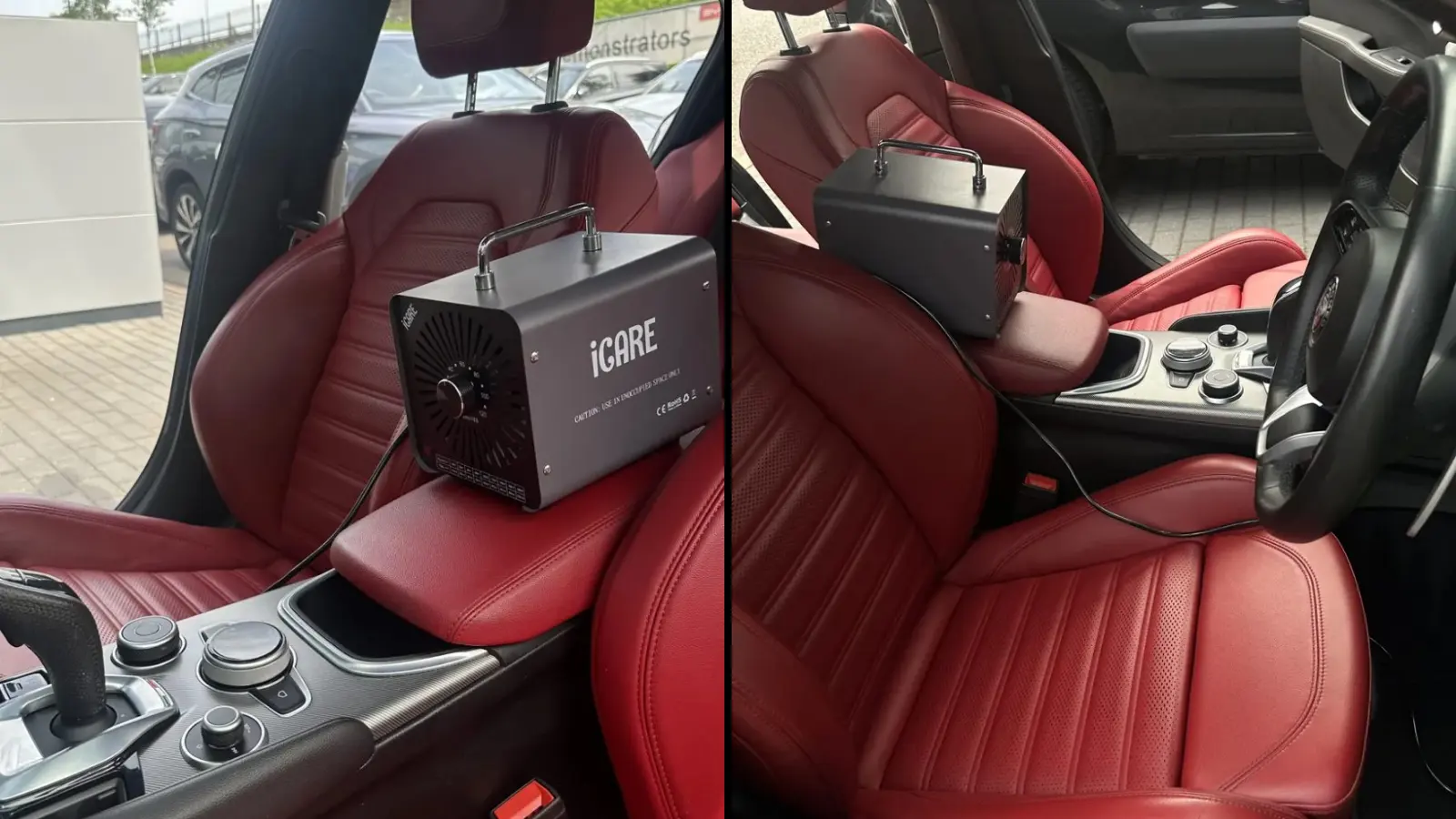
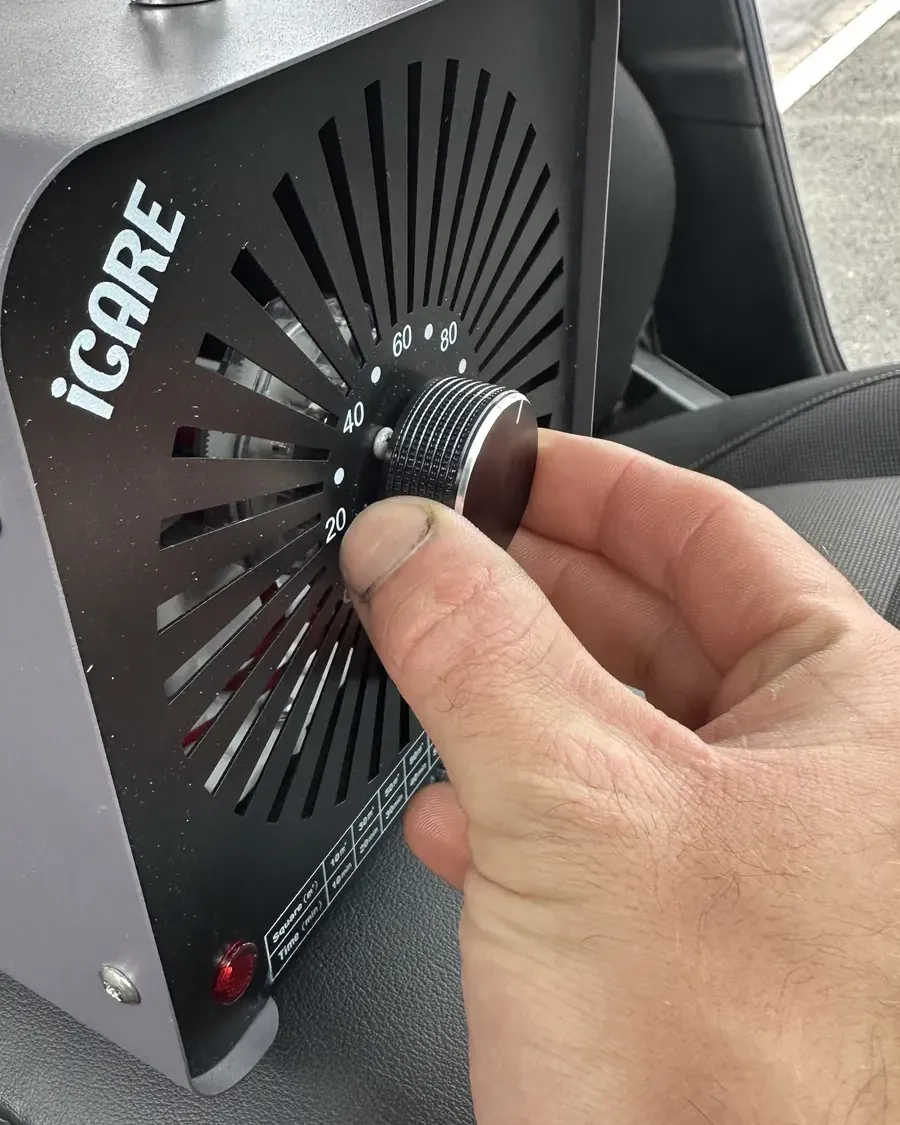
A note on ozone generators: they're sold online for home use, but ozone must only ever be used in an empty car, with no people or pets inside, and the car needs airing out properly afterwards. Ozone also doesn't replace cleaning. Run it in a dirty car and the smell can come back once the residue warms up again.
When DIY isn't enough
Home cleaning reaches the surfaces. It struggles with:
- Years of smoking. The residue has gone deep into the seat foam and carpet underlay, beyond what a cloth or a household vacuum can reach.
- A stained roof lining. Cleaning it without making it sag takes care and the right products.
- Smell coming from the vents. A new filter helps, but residue in the ducts can keep the smell blowing back.
- Smell that returns on warm or damp days. That's a sign the source is still in the fabric.
One honest point: if the car is still smoked in, the smell will build up again, however well it's been cleaned.
How we remove cigarette smell on our jobs
Our odour removal service is built around one idea: remove the cause first, then treat what's left. We choose the treatment to match the odour, and we do it at your home or workplace.
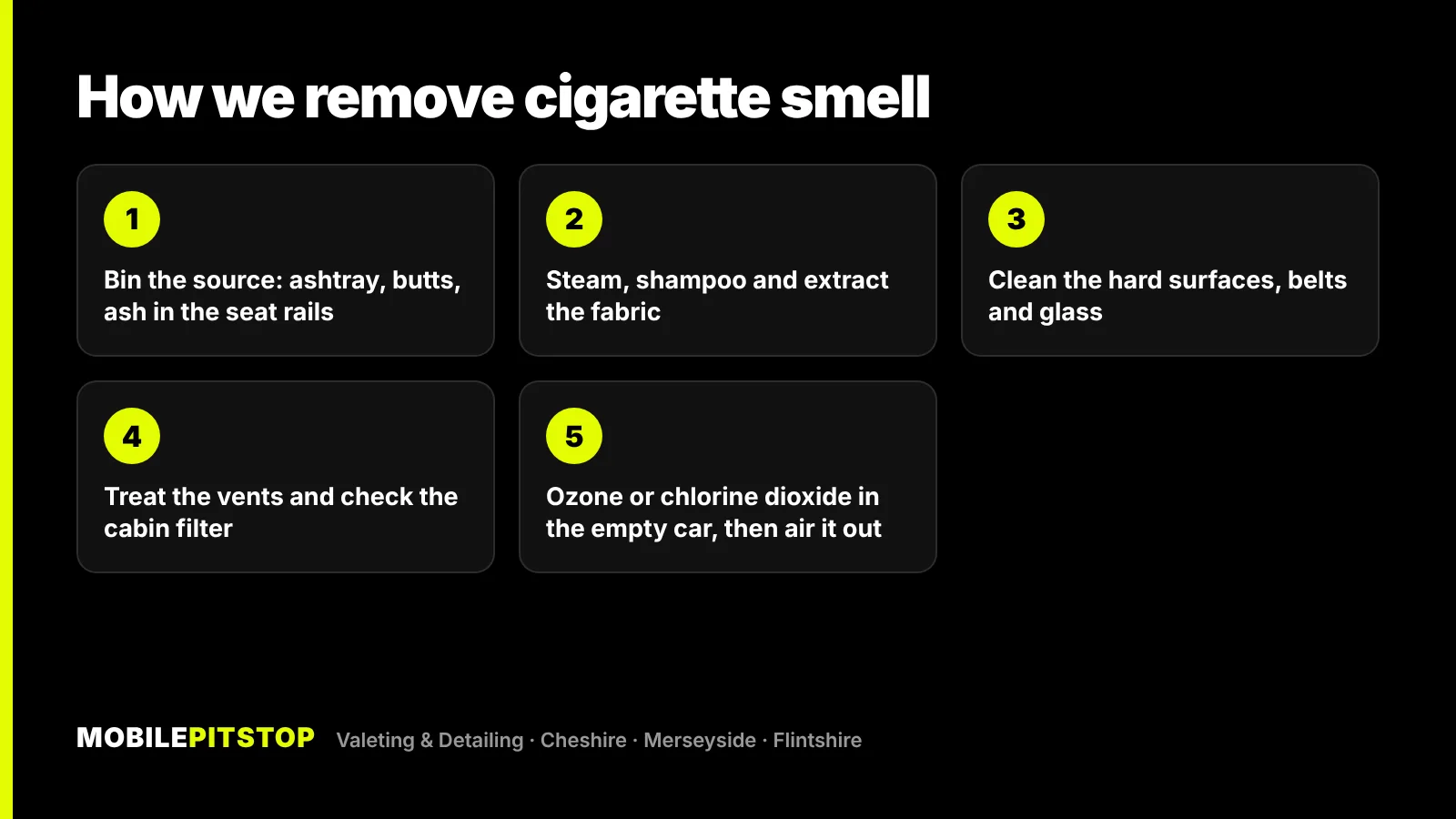
- Source removal. Ash, butts and debris come out first, with compressed air through the seat rails and joins before the vacuum.
- Steam, shampoo and extraction of the seats, carpets and mats. Extraction is the step that matters here: it pulls the dirty water, and the residue with it, back out of the fabric instead of leaving it to dry in.
- Hard surfaces, belts and glass cleaned, so the film isn't left to keep giving off smell.
- The ventilation treated, not just the surfaces you can see, with advice on the cabin air filter so the smell doesn't come straight back through the fan.
- Ozone or chlorine dioxide treatment where it's suitable, in the empty, closed car, to reach the smell left in places no brush can get to. The car is then aired out before you get back in.
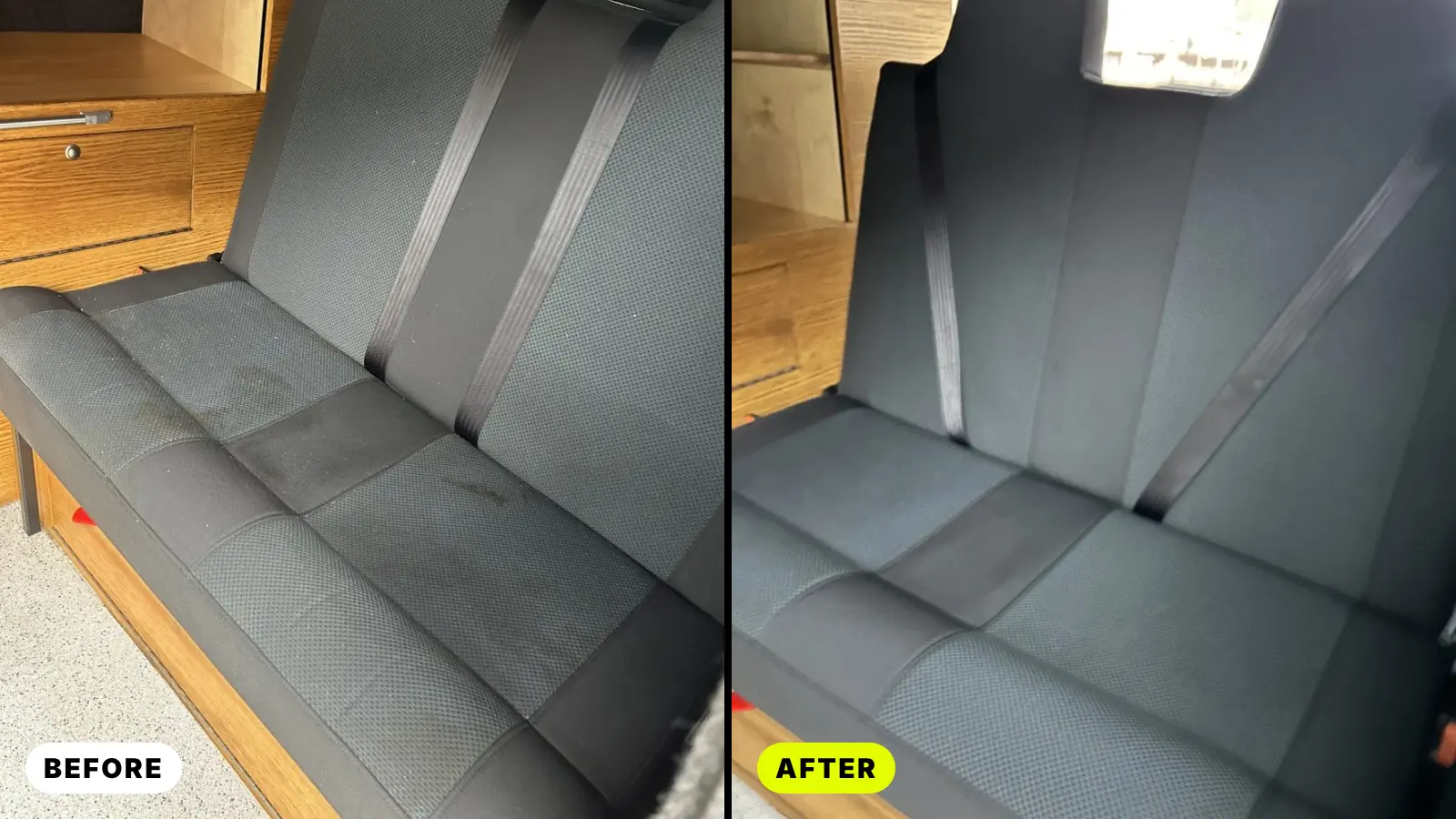
If the roof lining is badly stained, the headliner clean is available as an add-on to the Interior Deep Clean. If the car needs a full reset inside and out, an In & Out Deep Clean includes steam, shampoo and extraction of the seats, carpets, mats and boot.
Not sure what yours needs? Send us a few photos in daylight and tell us how long the car has been smoked in. We'll tell you straight which service fits, including when a cheaper one will do.
Selling a car that's been smoked in
Buyers notice smoke smell within seconds of opening the door, and it's one of the quickest ways to put someone off a car. A spray-and-hope clean before a viewing usually doesn't fool anyone, because the smell comes back as the car warms up on the test drive.
If you're selling, have the smell dealt with before you take the photos and book viewings. If it has an ozone treatment, leave enough time afterwards for the car to air out fully. While you're at it, clean the inside of the glass and the roof lining, because yellowed glass and a stained headlining tell a buyer the same story the smell does.
The same applies to a lease or company car you're handing back. It's worth dealing with a smoked-in interior before the car goes back, not after.
Common questions
Do air fresheners get rid of cigarette smell?
No. They cover the smell with a stronger one, but the tar and nicotine residue causing it stays in the fabric, roof lining and vents. Once the scent fades, the smoke smell comes back.
Is ozone safe to use in a car?
Only in an empty car, with no people or pets inside, and the car must be aired out properly before anyone gets back in. It works best after the interior has been cleaned, not instead of cleaning.
Will changing the cabin air filter get rid of smoke smell?
It helps, because an old filter keeps blowing smoky air back into the cabin. On its own it won't fix smell held in the seats, carpets and roof lining.
Will the smell come back after a treatment?
If the car is smoked in again, the smell will build up again. Removing the residue from the fabric first, then treating what's left, is what stops it creeping back on warm or damp days.